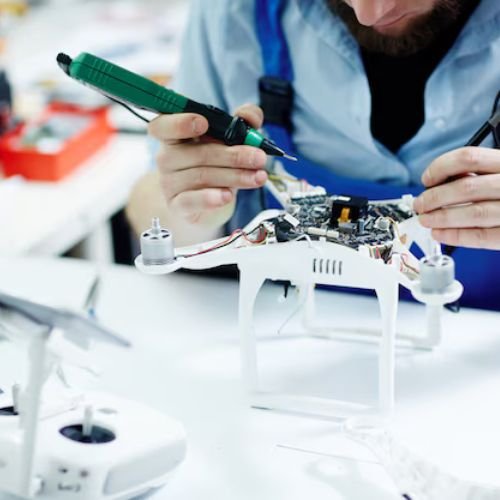

Building a micro drone requires careful selection of components to ensure optimal performance, flight stability, and battery efficiency. Below is a comprehensive guide on choosing the right components for a micro drone, including specifications, pros and cons, usage, and purchasing options.
1. Framee – The Foundation Part of Micro Drone Components

The frame is the foundation of a micro drone, holding all components together. It should be lightweight yet durable to withstand minor crashes.
Specifications:
- Material: Carbon fiber, plastic, or composite
- Size: 65mm to 110mm (measured diagonally from motor to motor)
- Weight: 5g to 20g
- Mounting Holes: Compatible with chosen motors and flight controller
Pros:
- Lightweight construction
- High durability (especially carbon fiber frames)
- Various sizes available
Cons:
- Carbon fiber is expensive
- Plastic frames are less durable
- Size limitations may restrict motor selection
Why It’s Essential:
- Holds all drone parts together.
- Provides durability during crashes.
- Decides drone’s size & weight capacity.
- Impacts flight stability.
- Supports easy upgrades.
- Determines portability.
- Affects aerodynamics.
- Protects internal electronics.
- Gives overall shape & balance.
2. Motors – Power Units in Essential Micro Drone Parts
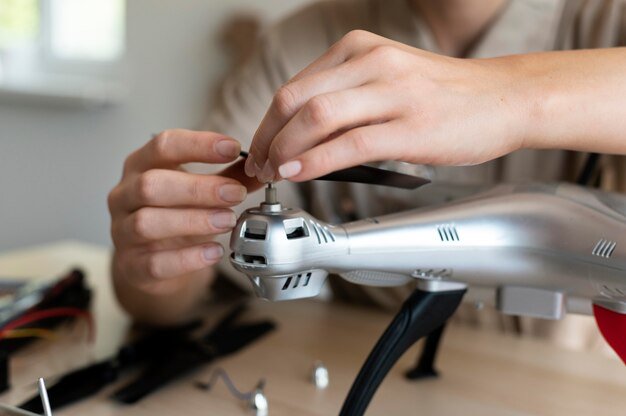
Brushless or brushed motors provide thrust for flight. Brushless motors are more efficient and durable but can be heavier and more expensive.
Specifications:
- Type: Brushed (coreless) or Brushless
- KV Rating: 6000KV – 20000KV
- Weight: 2g to 5g per motor
- Voltage: 3.7V – 11.1V
Pros:
- High-speed performance
- Lightweight options available
- Efficient power consumption
Cons:
- High KV motors drain the battery faster
- Brushless motors require electronic speed controllers (ESCs)
Why It’s Essential:
- Generates thrust for takeoff.
- Affects drone speed & agility.
- Supports stable hovering.
- Impacts flight time & efficiency.
- Defines payload capacity.
- Balances drone in windy conditions.
- Works with propellers for lift.
- Decides flight smoothness.
- Essential for responsive controls.
3. Propellers– Key Components for Micro Drone Stability
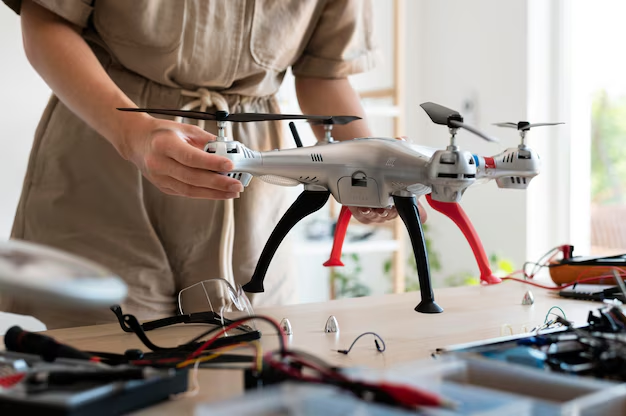
Propellers generate lift and influence drone maneuverability.
Specifications:
- Material: Plastic, nylon, or carbon fiber
- Size: 31mm – 65mm
- Blade Count: 2-blade, 3-blade, or 4-blade
Pros:
- Lightweight and inexpensive
- Available in different shapes for specific flight styles
- Easily replaceable
Cons:
- Can break easily
- Performance varies with propeller type
Why It’s Essential:
- Creates lift with motor power.
- Controls drone movement.
- Affects speed & maneuverability.
- Impacts battery efficiency.
- Provides balance in air.
- Decides noise level.
- Helps in precise turns.
- Works in sync with ESCs.
- Key to safe flight.
4. Flight Controller (FC)– The Brain Behind Micro Drone Setup
The flight controller processes sensor data and stabilizes the drone.
Specifications:
- Processor: F4, F7, or H7 MCU
- Gyro: MPU6000 or ICM20689
- UART Ports: 2-5 for receiver, VTX, and peripherals
Pros:
- Ensures flight stability
- Customizable with firmware (Betaflight, INAV)
- Compatible with various sensors and peripherals
Cons:
- Requires proper tuning
- More advanced models can be expensive
Why It’s Essential:
- Balances the drone in flight.
- Translates pilot commands.
- Supports GPS (in advanced drones).
- Reduces wobbling.
- Ensures smoother hovering.
- Manages sensors & orientation.
- Provides flight modes.
- Essential for autonomous features.
- The brain of all micro drone components.
5. Electronic Speed Controllers (ESCs)– Control Units in Micro Drone Components
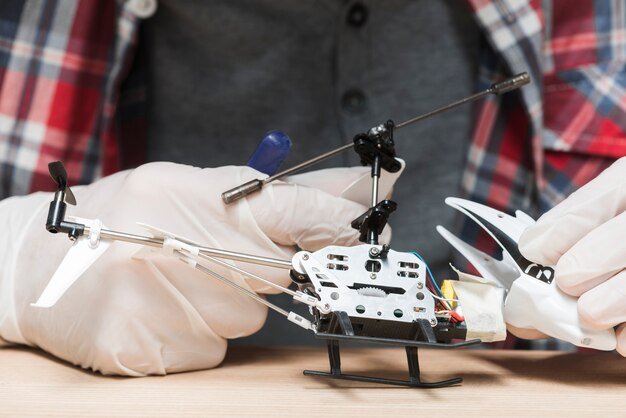
ESCs regulate motor speed and power delivery.
Specifications:
- Type: 4-in-1 or individual ESCs
- Current Rating: 5A – 20A
- Protocol: DShot600, Multishot, or PWM
Pros:
- Essential for smooth motor control
- Advanced options support high-speed communication
Why It’s Essential:
- Controls motor speed.
- Prevents overheating.
- Improves battery efficiency.
- Allows smooth acceleration.
- Supports stable hovering.
- Manages quick turns.
- Works with FC for balance.
- Prevents motor burnout.
- Ensures smooth landing.
6. Battery and Power System– Energy Source for Micro Drone Parts
The battery provides power to all components.
Specifications:
- Type: LiPo (Lithium Polymer)
- Voltage: 1S (3.7V) to 3S (11.1V)
- Capacity: 250mAh – 850mAh
- Discharge Rate: 30C – 80C
Pros:
- High power output
- Lightweight options available
Why It’s Essential:
- Provides flight energy.
- Determines flight time.
- Affects drone’s weight.
- Needs proper charging safety.
- Impacts portability.
- Directly connects to ESCs.
- Ensures consistent power flow.
- Decides drone endurance.
- Allows longer flights with quality batteries.
7. Radio Transmitter and Receiver– Communication Link in Micro Drone Setup
The transmitter and receiver enable remote control of the drone.
Specifications:
- Frequency: 2.4GHz
- Protocol: FrSky, FlySky, Crossfire, ELRS
- Channels: 4+ for drone control
Pros:
- Long-range control options are available
- Wide variety of transmitters for different budgets
Why It’s Essential:
- Connects pilot & drone.
- Provides remote commands.
- Affects signal range.
- Reduces input lag.
- Works with FC for precision.
- Impacts response speed.
- Ensures safety in flight.
- Supports multi-channel controls.
- Essential for every flight.
8. Camera and Video Transmission (FPV System) – Vision Component for Micro Drones
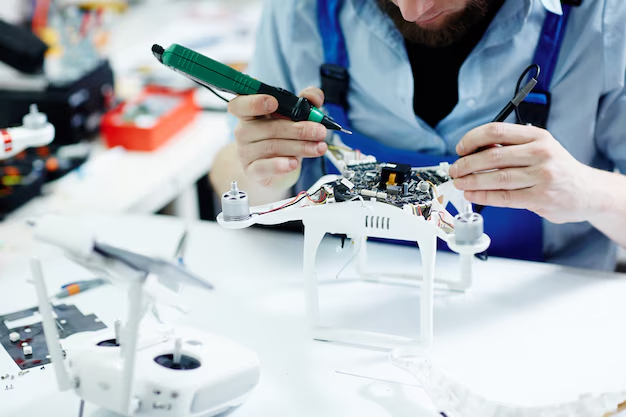
FPV (First-Person View) cameras allow real-time video streaming for an immersive flight experience.
Specifications:
- Camera Resolution: 600TVL – 1200TVL
- Video Transmission: Analog (5.8GHz) or Digital (DJI FPV, HDZero)
- Power Output: 25mW – 200mW
Pros:
- Provides real-time video feed
- Various resolutions available
Why It’s Essential:
- Captures aerial footage.
- Enables First-Person View.
- Adds purpose to drone flying.
- Works with video transmitter.
- Affects video quality.
- Important for racing drones.
- Makes navigation easier.
- Allows live streaming.
- Creates immersive flying experience.
9. Where to Purchase
Here are some recommended online stores for purchasing micro drone components:
- Banggood – https://www.banggood.com/
- GetFPV – https://www.getfpv.com/
- RaceDayQuads – https://www.racedayquads.com/
- Rotor Riot – https://www.rotorriot.com/
- BetaFPV – https://betafpv.com/
- Amazon – https://www.amazon.com/ (for generic components and tools)
How to Use & Assembly Guide
- Assemble the Frame: Secure the motors and attach the flight controller.
- Install the Motors: Connect motor wires to the ESC.
- Mount the Flight Controller: Ensure proper orientation and firmware configuration.
- Connect the Power System: Attach the battery connector and voltage regulator.
- Set Up the FPV System: Mount the camera and transmitter for FPV flying.
- Bind the Transmitter & Receiver: Ensure a proper connection and range test.
- Calibrate and Test: Check flight stability before full operation.
Watch the Video for more information:
Conclusion
Choosing the right components for a micro drone is crucial for achieving desired flight characteristics. Selecting quality parts ensures durability, stability, and performance. Carefully balancing weight, power, and features will help build an efficient and enjoyable micro drone.
Looking for high-quality travel options? Don’t miss our detailed guide on the 10 Best Mini Drone Camera With 4K – a complete list to help you choose the perfect drone for your next adventure.